How to Improve Math Skills
Thereโs no doubt about it: math is tough. As a result, a lot of kids (and adults!) struggle with math at some point in their lives. By building up your skills and practicing every day, you can make math a little less frustrating and have a higher chance of success. Use these tips and tricks during school, while youโre studying, and when youโre out and about to break down and complete math problems easily.
Play math games.
Build up your skills while having some fun!
Look for online games that match your age and education level for the best experience. You can get computer games online or download apps on your phone to play games on the go. Try sites like :
- DragonBox 5+ lets you gradually build your algebra skills until youโre able to master more and more advanced equations.
- Prodigy, a game targeted at elementary-school students, integrates math practice into a role-playing game that allows players to use math to make their way through an appealing fantasy world.
- Poly is a calculator-based math game for more advanced high school and college students.
Practice math in everyday scenarios.
Make math part of your daily life to practice it without even thinking.
For example, if a sweater thatโs regularly $38 is on sale for 30% off, what is the sale price? ($26.60). Or if you need to double a recipe that calls for 3/4 cup of flour, how much flour will you need? (1.5 cups).
- Or, if you plan to hike a new trail thatโs 7 miles long and it takes you 20 minutes to walk a mile, how long should you plan for your hike to take? (2 hours and 36 minutes).
Use mental math if you can.
Doing math in your head can help you remember key concepts.
Some problems, like geometry or calculus, require a pencil and paper to get started; however, math basics like addition, subtraction, multiplication, and division are ones you can do in your head. If you come across an easy problem, do it in your mind first before resorting to a calculator.
- If youโre worried about your mental math skills, you can always double check your answer on your phone or computer.
Review math concepts every day.
Practice makes perfect, and math is no exception.
Set a study schedule for yourself and try to review your math problems for 15 to 20 minutes per day (or more if a test is coming up). Your skills will build up over time with not much effort on your part!
- Make note cards. Write out important concepts and formulas on note cards so that you can easily refer to them while doing problems and use them for study guides before exams.
- Study in a quiet place. Distractions, whether aural or visual, will detract both from your ability to pay attention and to retain information.
- Study when youโre alert and rested. Donโt try to force yourself to study late at night or when youโre sleep-deprived.
Show your work, not just your answers.
Writing it all out can help you spot mistakes.
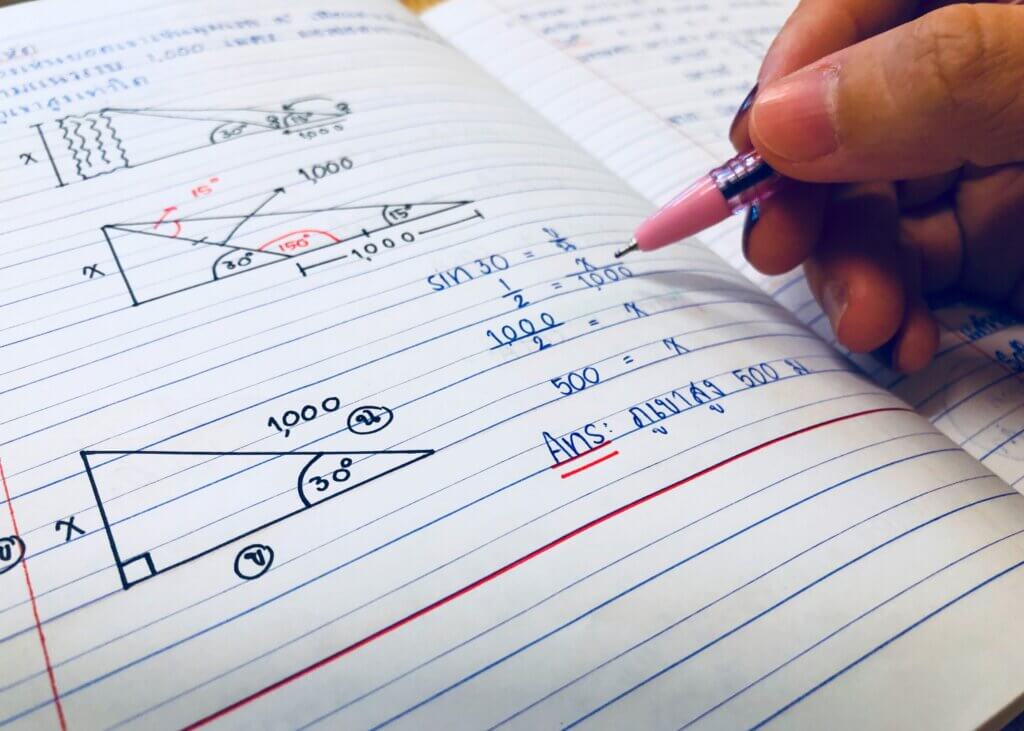
As you work through a problem, use a pencil to write out what you did and how you did it. Some teachers require you to show your work anyway, so it shouldnโt be too much of a hassle.
- Showing your work can also help you check your answers on homework and test problems.
- Donโt solve math problems with a pen! Use a pencil so you can erase and correct mistakes if they happen.
Sketch out word problems to give yourself a visual.
Word problems are usually tougher than straight math problems.
If youโre struggling with picturing the problem on the page, grab a pencil and get to drawing. You donโt have to be an artistโmake a few circles to represent pies or some stick figures to stand in for people. Use your visuals to help you solve the problem as you work through it.
- For example, a problem might say, โIf you have 4 pieces of candy split evenly into 2 bags, how many pieces of candy are in each bag?โ You could draw 2 squares to represent the bags, then fill in 4 circles split between them to represent the candy.
Practice with example problems.
You can find tons of example problems online.
If youโre going over a concept, look it up and try 2 to 3 problems on your own. Check the answers to figure out if you got them right, and study the concept again if you didnโt.
- Your teacher might also be able to give you some extra example problems if you ask for them.
- Using example problems is a great way to practice for a test.
- Identify which skills and concepts youโll need to solve the problem. This will give you an overall sense of what youโll need to do to find the solution.
Look up lessons online.
Sometimes you need a little more explanation to really understand.
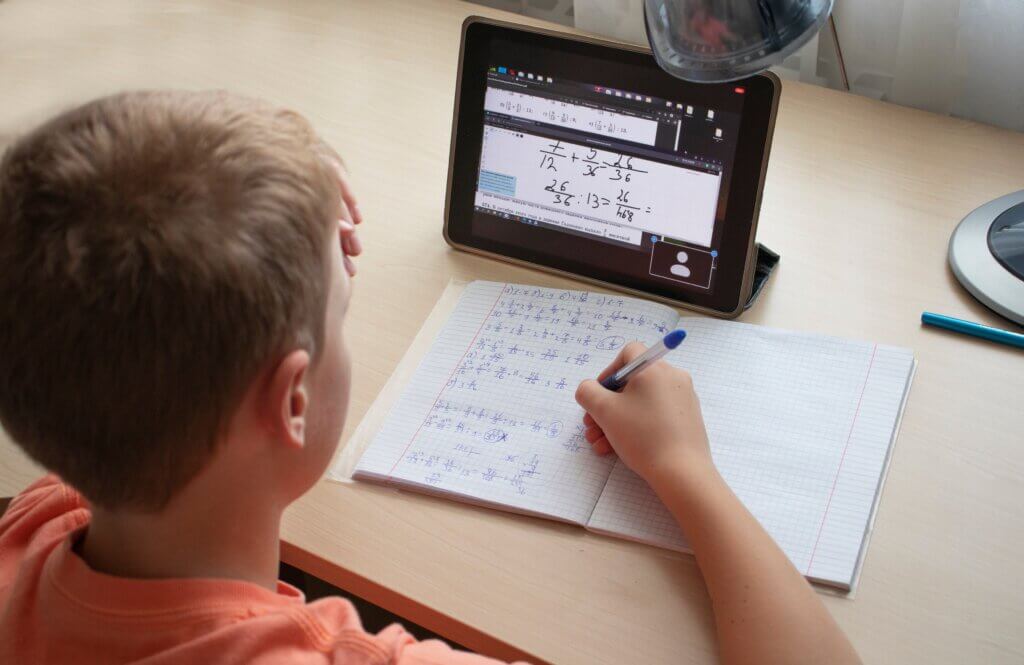
If youโre having trouble and you donโt have a class for a few days, try looking up a math lesson online. There are tons of resources for math students out there, including:
- PatrickJMT on YouTube, a college math professor
- Khan Academy, a website with video lessons and interactive study guides
- Breaking Math, a podcast for math concepts
Master one concept before moving onto the next.
In math, each topic builds upon the last one.
Itโs super hard to move forward if you donโt understand the previous lesson. If thereโs something you arenโt quite getting, spend some extra time studying it or doing homework problems to really cement it into your mind.
If youโre struggling with a particular idea or concept, donโt skip it and move ahead. Instead, seek help from the instructor or a tutor until youโve mastered the idea.